
LIVE Webinar
Listening in on Cells:
Scaling Single-Cell Omics
& Cell-Cell Communication
Tuesday, October 27, 2026
11 AM ET / 8AM PT / 4PM BST
Single-cell and spatial omics can reveal how cells talk to each other. Scaling those experiments past a handful of samples exposes real bottlenecks: batch effects, human error, and cost. Join Dr. Nathan Lewis (University of Georgia) for a look at how his lab is breaking through these limits, from computational tools that decode cell-cell communication to a new Opentrons–10x Genomics automated workflow that cuts hands-on time and boosts reproducibility.
What you'll learn:
From the science:
-
How multi-sample cell-cell communication analysis using Tensor cell2cell disentangles complex, time-sensitive signaling between cells
-
How ligand-receptor analysis is uncovering therapeutic targets, illustrated through a zebra finch model of learned vocalization deficits
-
Why sample number and design balance matter as much as sequencing depth when scaling experiments
From the integrated Opentrons, 10X Genomics and Ultima workflow:
-
How one Opentrons Flex deck layout automates the full post-GEM-RT workflow for both Chromium 3’ and 5’'' Gene Expression OCM chemistries, processing up to 32 samples per run
-
How roughly 8 hours of manual bench work becomes automated runtime, freeing up time for experimental design and analysis
-
How OpentronsAI enabled rapid deployment of temperature-controlled fragmentation without outside technical support
-
How automated workflows achieved strong gene-expression concordance between replicates
-
How Ultima sequencing can reduce sequencing-only costs by approximately 50% at high throughput.
Sign up here
Subject to your consent given above, by clicking on "register", Opentrons may use your personal information to communicate with you for marketing purposes. All information you provide in this site will be governed by our Privacy Policy.
Speaker
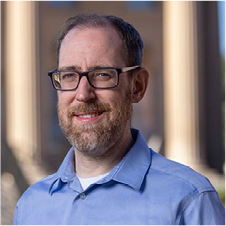
Dr. Nathan Lewis
University of Georgia